
But choosing the right pouch isn't simple. Many brands struggle with format selection, material specs, and finding a manufacturing partner who understands liquid-specific engineering — not just dry-product pouches.
This guide covers pouch types, materials, benefits, costs, and how to vet a manufacturing partner.
Key Takeaways
- Liquid pouches need multi-layer laminates and stronger seals than dry pouches due to weight and leak risk
- Spouted, three-side seal, and gusseted formats each suit different volumes and viscosities
- Material choice hinges on FDA compliance, barrier performance, and chemical compatibility
- Costs depend on layers, closures, print method, and order volume — not a flat rate
- Working with one integrated manufacturer reduces lead time and handoff errors
What Are Liquid Pouch Bags?
Liquid pouches are flexible packaging engineered specifically to hold, protect, and dispense liquid products. They're a different animal from dry-product pouches used for snacks or powders.
Why the extra engineering matters: Liquids are heavier and shift constantly inside the package. That movement creates impact energy against seals and seams during shipping and handling — far more stress than a static bag of chips ever sees.
Liquids also interact chemically with packaging films in ways dry goods don't, raising the risk of leaching or delamination over time.
Liquid pouches show up across a wide range of industries:
- Beverages (juice, water, sports drinks)
- Sauces and condiments
- Pharmaceuticals and OTC liquids
- Cannabis-infused liquids
- Cleaning products
- Personal care items (lotions, shampoos)
Each of these categories brings its own seal-strength, barrier, and regulatory demands. A juice pouch and a cleaning-chemical pouch look similar on a shelf, but the film construction underneath can be completely different.

Types of Liquid Pouch Packaging
Format choice depends on volume, viscosity, and how the product needs to present on shelf.
Spouted Pouches
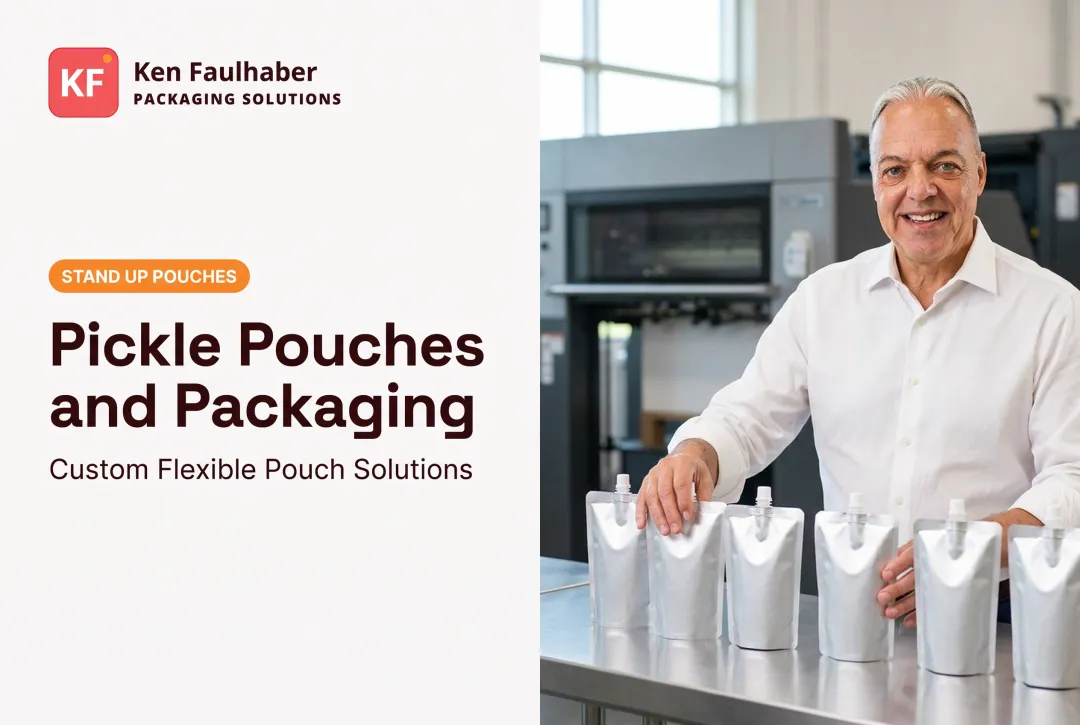
Stand-up pouches with spouts are the most common format for beverages and liquid detergents. Their flat-bottom gusset design gives them shelf visibility and stability rivaling rigid bottles.
Spouts come with various closure mechanisms: screw caps for resealability, push-pull tops for quick access. Typical applications include:
- Baby food and purees
- Drinks and smoothies
- Condiments and sauces
- Liquid detergents and cleaning products
Flat and Three-Side Seal Pouches
These pouches seal on three edges, leaving one open for filling. They're a go-to for:
- Single-serve liquid sachets
- Traditional medicine packaging
- Sample-size personal care products
Bag-in-Box and Gusseted Pouches
For bulk liquids, bag-in-box (BIB) formats pair a flexible inner bag with a rigid outer carton. Wine, cooking oils, and industrial fluids commonly ship this way. Gusseted pouches, with side or bottom folds, add stability for standalone liquid formats without a box.
Formosa's in-house bag-making and lamination cover spouted pouches, three-side seal pouches, and gusseted bags in one facility, so brands can change formats without switching suppliers mid-project.

Materials and Barrier Properties for Liquid Packaging
Liquid pouches need multi-layer laminate structures. A single-layer film that works fine for pretzels won't hold up against dish soap or shelf-stable juice.
Barrier Performance: MVTR and OTR
Two specs matter most:
- Moisture Vapor Transmission Rate (MVTR): How much water vapor passes through the film
- Oxygen Transmission Rate (OTR): How much oxygen reaches the product
Both directly affect shelf life. Standard test methods exist for each (ASTM D3985 for oxygen transmission, ASTM F1249 for water vapor), though exact target numbers vary by product rather than a universal figure across all pouches.
Chemical Compatibility
Aggressive personal-care chemicals can cause delamination or drive leaching from polyethylene (PE) layers over extended contact. This is why film selection needs to match the specific product formulation, not just the general category.
Regulatory Requirements
For food and beverage contact, materials must meet FDA food-contact substance requirements. The FDA requires food-contact substances used as food additives to receive premarket authorization before they reach the market. That rule covers BPA and other substances that could migrate from packaging into liquid contents.
Meeting those barrier and compliance needs takes more than one fixed film structure. Formosa's patented five-layer high-speed lamination technology is built to hit precise MVTR and OTR targets for liquid-specific applications.

Benefits and Limitations of Liquid Pouch Packaging
The Upside
Key advantages include:
- Material savings: Zacros America compared a 4 fl oz rigid bottle at 17.4 grams against an equivalent spout pouch at 5.9 grams — over 65% less plastic for the same fill volume.
- Shipping efficiency: Flexible pouches compress for storage and transport, cutting cube-utilization costs versus rigid, oddly shaped bottles.
- Near-total evacuation: Glenroy reports rigid containers can leave 6% to 14% of product behind, while pouches can evacuate up to 99.5%, meaning less wasted product for the consumer.

The Trade-offs
Pouches aren't perfect for every situation:
- Puncture sensitivity: Flexible formats are more prone to tears than rigid containers, especially in retort applications where careful handling and over-wrapping may be needed during distribution.
- Premium perception gap: Some consumers still associate rigid packaging with higher quality. Brands entering premium categories often need stronger print design and branding to offset that bias.
Understanding Liquid Pouch Costs
There's no universal "average cost" for liquid pouches. Pricing depends on several variables.
Key cost drivers:
- Material type and layer count — more barrier layers mean higher material cost
- Pouch size — larger formats use more film per unit
- Closure complexity — spouts and zippers add hardware and assembly steps
- Print method — rotogravure printing requires cylinders, which add setup cost but deliver strong color accuracy on long runs
Order volume matters too. Larger runs spread fixed costs (like cylinder setup) across more units, lowering the per-piece price. Smaller runs may benefit from digital printing, which skips cylinder charges entirely.
Because these variables interact differently for every project, the most reliable approach is requesting a quote based on your final specifications rather than relying on published averages.
Choosing the Right Liquid Pouch Manufacturing Partner
Working with a single point of contact who has access to integrated capabilities: lamination, printing, bag-making, and fill-and-seal cuts down on lead time and reduces handoff errors between vendors.
Certifications Worth Checking
When vetting suppliers for food, pharma, or cannabis liquid packaging, look for:
- ISO 9001: general quality management
- ISO 22000 / FSSC 22000: food safety management systems
- HACCP compliance: hazard analysis for food-safety-critical processes
For pharmaceutical applications, cleanroom production (Class 10,000 or better) adds another layer of assurance beyond standard certifications.
Why One Conversation Matters
Ken Faulhaber is an independent representative who connects brands to Formosa's liquid pouch network through one conversation, so you are not coordinating separate lamination, print, bag-making, and fill vendors.
Formosa runs four lamination machines (including the patented five-layer unit), in-house bag production, and fill-and-seal machinery under one roof. Share your product, format, quantity, and certification needs, and you typically hear back within one business day.
Frequently Asked Questions
What are the different types of pouch packaging?
The main formats are stand-up pouches, spouted pouches, flat/three-side seal pouches, gusseted pouches, and bag-in-box. Each suits different volumes, viscosities, and shelf presentation needs.
What are stand-up pouches used for?
They're widely used for beverages, sauces, detergents, and personal care products because of their shelf visibility and flat-bottom stability.
Do stand-up pouches stand up on their own?
Yes, thanks to flat-bottom gusset construction. They do need proper fill volume, though. Underfilled pouches can tip or slump on the shelf.
How much does a stand-up pouch cost?
Costs vary based on size, material layers, closure type, and order volume. Request a custom quote based on your final specifications for accurate pricing.
Are juice pouches safe?
Yes, when manufactured with FDA-compliant food-contact materials. Proper film selection and lamination ensure the product stays protected and safe for consumption.
Where can I buy drink pouches?
Custom drink pouches are sourced through packaging manufacturers or independent sales representatives, not retail channels. Start with a spec conversation covering format, barriers, and volume.