
Sports nutrition products face a brutal reality: they're opened dozens of times over their lifespan, not consumed in one sitting. Every scoop lets in air and moisture. Common failures—clumping, flavor loss, seals that won't reclose properly—don't just annoy customers. They make people doubt the formula itself, even when the science behind it is solid.
Getting the format, materials, and manufacturing partner right protects your product's performance from the first use to the last. Here's what that actually takes.
Key Takeaways
- Repeated pouch openings over weeks—not days—make moisture and oxygen the biggest threat to powder performance
- Format choice should match your production stage—sachets for launch, roll stock for scale
- Moisture-barrier film with low WVTR prevents the clumping that erodes consumer trust
- Sustainable mono-material and compostable pouches run without re-engineering fill lines
- Working with one packaging partner across formats cuts lead time and eliminates handoff delays
Why Sports Nutrition Packaging Faces Unique Demands
A bag of pretzels gets opened once and finished within days. A tub of whey protein gets opened 20-30 times over a month or more. Each opening is a chance for humid air to get in and product freshness to get out.
The environment doesn't help. Sports nutrition products regularly face:
- Gym bags that trap heat and humidity
- Car trunks with wide temperature swings
- Physical impact from being tossed around daily
- Repeated exposure every time the scoop comes out
Whey and protein powders are naturally hygroscopic—meaning they attract and hold moisture. Research published in the Journal of Dairy Science confirms that water adsorption by lactose and protein contributes to the hygroscopicity of whey powders, which is exactly what drives caking and clumping.
One stability study on a spray-dried supplement formulation tracked 180 days at elevated temperature and humidity. Moisture content rose from 3.80% to 5.85%, while dispersibility dropped from 85.12% to 82.64%. Small shifts—real mixing problems on the scoop.
For brands, the bigger risk is perception. Customers rarely blame the packaging. When a scoop clumps or a flavor tastes flat, they assume the formula is bad. Packaging failure becomes a formulation problem in the customer's mind, whether that's fair or not.
Choosing the Right Packaging Format for Sports Nutrition
Format isn't a cosmetic decision. It determines how well your product survives its actual use case.
Stand-Up Pouches for Retail
Stand-up pouches remain the default for protein powders and hydration mixes on store shelves. They offer:
- Resealable closures (zipper or pocket zipper) for repeated use
- Wide-mouth openings for easy scooping
- Shelf presence that stands upright, unlike flat bags Formosa's stand-up pouch program includes functional add-ons like clear windows, spouts, tear notches, and custom die-cut shapes that help you differentiate a crowded flavor lineup.

Sachets and Sticks for Trial and Portability
Single-serve sachets and stick packs serve a different purpose: trial, sampling, and travel. Nutritional Outlook notes that demand for portion-controlled, on-the-go formats has driven stick-pack growth specifically among powdered supplements, collagen, electrolytes, and pre/post-workout products. If you're running a subscription model or need low-cost sampling units, this format fits.
Rollstock and Form-Fill-Seal for Scale
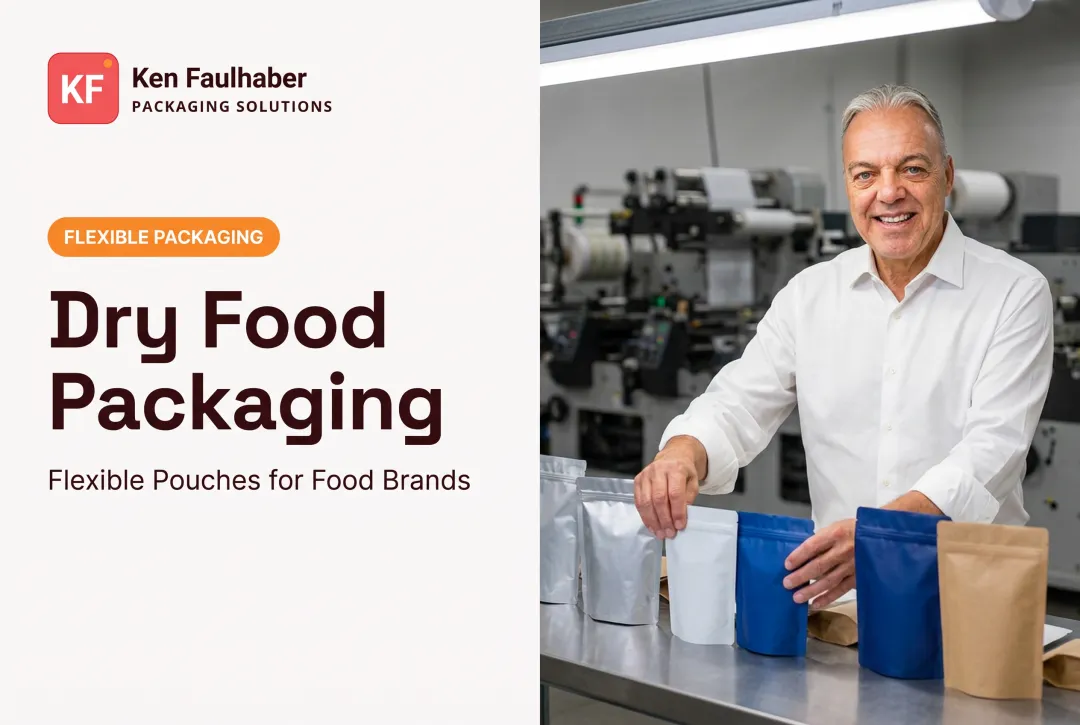
Once you move past small-batch production, rollstock and form-fill-seal (FFS) film become the economical choice. FFS supports high-volume automated filling, which matters once you're producing thousands of units weekly instead of hundreds. The mistake many brands make: locking into a format before thinking through where they'll be in 18 months. Launching with stand-up pouches makes sense for a new brand testing flavors. But if a costly redesign is needed the moment volume scales, that's a planning failure, not a packaging failure. This is where having one contact who understands your full production arc helps. Ken Faulhaber works as an independent representative giving brands single-point access to Formosa's stand-up pouch, rollstock, and form-fill-seal capabilities, so the format conversation happens once, not across three separate vendors.
Materials and Barrier Properties That Protect Performance Ingredients
Format gets your product on the shelf. Material barrier properties keep the formula stable through storage and after the first open.
Moisture Barrier: The Clumping Fix
Low water-vapor transmission rate (WVTR) film keeps humidity out, which directly prevents the caking and hardening that ruins scoopability. Testing for this follows ASTM F1249, the standard method for measuring water-vapor transmission through flexible barrier films.
Oxygen Barrier: Protecting Flavor and Actives
Pre-workouts and amino formulas contain sensitive compounds that degrade with oxygen exposure. Oxygen transmission rate (OTR) testing, defined under ASTM D3985, measures how well a film blocks that exposure. Lower OTR means better flavor stability over the product's shelf life.
Odor and Flavor Containment
These products often sit next to gym clothes and equipment, so barrier film needs to block outside odors from migrating in and keep the product's own aroma from fading out.
How Formosa approaches this: Five-layer high-speed lamination technology lets brands specify exact WVTR and OTR targets per project. Rather than picking from a generic catalog, the film structure gets built around your product's specific moisture and oxygen sensitivity.

Material selection only works alongside format choice. A great barrier film in the wrong format still leaves gaps—for instance, a poorly designed zipper closure can undo the protection a high-barrier film provides.
Sustainability Trends Shaping Sports Nutrition Packaging
In sports nutrition, the shift away from rigid protein tubs is accelerating, driven by both cost and regulation.
Why brands are moving to flexible formats:
- Lighter pouches cut shipping weight and material use
- Refill systems cut total plastic across repeat purchases
- Extended producer responsibility (EPR) laws are raising costs for non-recyclable rigid packaging
California's SB 54, per CalRecycle, established EPR requirements for packaging producers starting in 2022, with an updated covered-materials list published at the end of 2025.
Colorado's Producer Responsibility Program followed a similar path, requiring producer participation by mid-2025. More states are expected to adopt similar frameworks.
Mono-material pouches are gaining traction because they're easier to recycle than multi-material laminates, which often can't be processed through standard recycling streams.
That same recyclability goal is why Formosa offers recyclable and compostable pouch structures built for existing fill lines. Brands can move to sustainable packaging without buying new equipment or re-engineering production.

Packaging Design That Builds Buyer Confidence
Shoppers decide whether a supplement looks legitimate before they ever open it. A survey of 400 nutraceutical consumers found that packaging, label information, and design directly influence buying behavior and sensory expectations.
For multi-SKU flavor lines, consistency matters as much as individual design quality:
- Rotogravure printing delivers accurate, repeatable color across long production runs
- Matched color systems keep flavor variants reading as one cohesive brand on shelf
- High-resolution graphics signal quality before a customer reads a single ingredient

On-pack messaging is getting simpler, too. Complex ingredient science does not need to look complicated. Brands that decode their formulas into plain language make it easier for mainstream buyers, not just supplement veterans, to trust what's inside.
Why Brands Choose an Independent, Single-Point Packaging Partner
Sports nutrition brands often juggle separate vendors for pouches, printing, and film—and with them, separate timelines, quality standards, and points of failure.
Working with one representative who has access to multiple manufacturing capabilities removes that friction. Ken Faulhaber provides direct access to Formosa's:
- In-house rotogravure printing for consistent, color-accurate graphics
- In-house bag making for stand-up pouches, gusset bags, and spout pouches used for powders, gels, and concentrates
- Thermoforming for retail-ready trays and clamshells
- Four lamination machines, including a patented five-layer high-speed unit
Because these processes happen under one roof, there's no handoff delay between a printing vendor and a bag-making vendor and a lamination supplier. That means tighter lead times when you need to hit a product launch, a seasonal drop, or a restock before a shelf gap opens up.
Ken also commits to a one-business-day response on project inquiries, which matters when a packaging decision is holding up your production schedule.
Frequently Asked Questions
What is the best type of packaging for protein powder?
Resealable stand-up pouches with moisture-barrier film work best for retail protein powder, offering repeated-use closures and wide-mouth scooping. Once volume scales up, rollstock becomes the more efficient production option.
What packaging is best for pre-workout supplements?
Single-serve sachets or stick packs suit pre-workout products well, especially for trial and portability. Oxygen-barrier film is essential here to protect flavor and active ingredients from degrading.
How do you prevent protein powder from clumping in packaging?
Use moisture-barrier films with low water vapor transmission rates (WVTR) to keep humidity out. Properly sealed, resealable closures also matter. A weak seal undoes even the best film.
Is flexible pouch packaging recyclable?
Yes. Mono-material pouch structures and compostable options are now available for sports nutrition brands, and many are compatible with existing fill lines, so no equipment changes are needed.
How do I choose between stand-up pouches and rollstock for my supplement brand?
It comes down to production volume and stage. Stand-up pouches suit smaller, launch-stage batches, while rollstock and form-fill-seal fit automated, high-volume production runs.
What certifications should a sports nutrition packaging supplier have?
Look for ISO 9001, ISO 22000, FSSC 22000, and HACCP compliance. These certifications indicate quality management and food-safety practices appropriate for supplement packaging production.